
Temecula and Murrieta Apartments: The Full Picture
Temecula and Murrieta Apartments: The Full Picture
I put out a video recently about all the apartment construction happening along Jefferson Avenue, Murrieta Hot Springs Road, Los Alamos Road, and Rancho California Road. The response was significant. People have strong feelings about this, and they should.
What is actually being built
The numbers are large. At the corner of Jefferson Avenue and Murrieta Hot Springs Road alone, two separate projects combine for roughly 1,300 units. The first, developed by JPI, covers about 31.7 acres purchased for 38 million dollars. The full plan called for 852 units across 16 four-story buildings. As of January 2026, JPI had closed on Phase 1 only, a 394-unit project now targeting delivery in 2028.
The second project at that same corner, 387 units across 15 three-story buildings on 18 acres, was approved by the Murrieta Planning Commission in March 2024. A council member appealed the approval, arguing the traffic analysis failed to account for what all these projects mean together, not just one at a time.
Elsewhere: Canopy Apartments at 40628 Los Alamos Road in Murrieta opened in October 2024. It has 317 units managed by Greystar, with rents roughly in the range of 2,200 to 3,000 a month. The Rendezvous project on Rancho California Road adds 294 units across two phases. And 270 units near the Temecula Duck Pond were approved with no public hearing at all.
Why the cities could not say no
This is the part most people do not know. Temecula and Murrieta did not choose to build all of this. The state of California told them they had to.
Every eight years, the state assigns each city a number of housing units it must plan for and permit. This is called the Regional Housing Needs Assessment, or RHNA. For the 2021 to 2029 cycle, Murrieta was assigned over 3,000 units. Cities that do not comply risk losing state funding, losing local zoning control, and facing what is called the builder's remedy, where developers can build dense housing regardless of what local zoning says.
Since 2021, at least 90 new state housing laws have taken effect. Senate Bill 8 extended the housing crisis designation to 2030. Senate Bill 9 allows up to four units on land zoned for one house. Senate Bill 10 limits environmental review challenges to upzoning near transit corridors.
"There's not a whole lot we can do to oppose this project. We're prohibited from even daylighting it."
That quote came from a Temecula city official about the 270-unit Rancho Highlands project. No public hearing. No council discussion allowed. That is what state preemption looks like in practice.
The concerns people are raising
The loudest concern is traffic. Jefferson Avenue was not designed for an additional 1,200 apartments funneling cars into it every morning. Murrieta Hot Springs at peak hours is already a problem. Rancho California Road already bottlenecks. Seventy to seventy-five residents showed up to Murrieta City Hall to speak about a single 100-unit project, and traffic was the top concern every time.
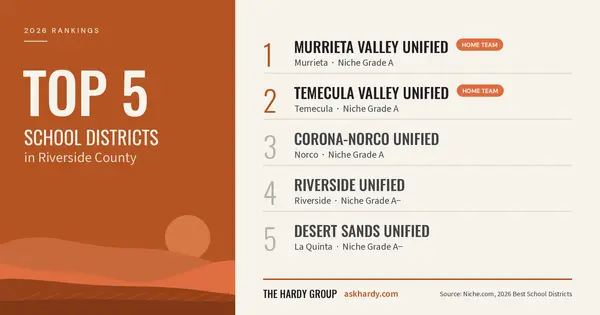
Schools are the second worry. Kensington Apartments are going up across from Murrieta Valley High School. TVUSD is one of the main reasons people move to this valley. If enrollment outpaces capacity, that changes the calculus for buyers.
Then there is the democratic process itself.
"When the mayor says they cannot even discuss opposing a project, when a 270-unit project is approved with no public hearing, when environmental review is done ministerially and residents have no mechanism to be heard, that is a loss of local government."
That frustration is real. It is not just a policy disagreement. It is people watching their community change with no seat at the table.
The case for more housing
The median home price in Murrieta is close to 700,000 dollars. A teacher, a nurse, a firefighter, a parks employee. Many of them cannot buy here. If the valley offers no rental options, those workers commute 45 minutes or leave entirely. That is not an abstract problem. That is a teacher shortage. That is a staffing problem at the hospital down the road.
Not everyone is in a position to buy right now. Young professionals, seniors who sold and need to downsize, people relocating for work. Renting is not a lesser way to live.
"The apartments are not the enemy. Teachers, nurses, and workers who make this community function deserve to live here."
The supply data supports this too. Canopy is currently offering significant move-in concessions just to fill units. That is more supply than immediate demand. More supply puts downward pressure on rents over time. That is how markets are supposed to work.
What this means for home values
Homes that directly border large apartment complexes can sell at a slight discount due to traffic, noise, and visual change. But well-managed apartment communities in cities with strong fundamentals do not tank values broadly.
The real number to watch is TVUSD. School district quality is the engine behind Temecula property values. If rapid density growth crowds classrooms and strains the district's funding, that is the metric that will show up in prices over the next three to five years. As of this past August, values in Murrieta were close to 700,000 dollars and over 700,000 in Temecula.
The deeper problem is not apartments. It is concentration without infrastructure. One complex on a commercial corridor is normal. Roughly 1,300 units at a single intersection, with cumulative traffic impacts that were not fully analyzed together, is a planning failure. The state is mandating the housing without funding the roads, the schools, the water, and the sewer systems those residents will need.
If you own a home near one of these projects, or you are considering buying in the valley, reach out this week and we can talk through what the specific location means for you.
Categories
Recent Posts