
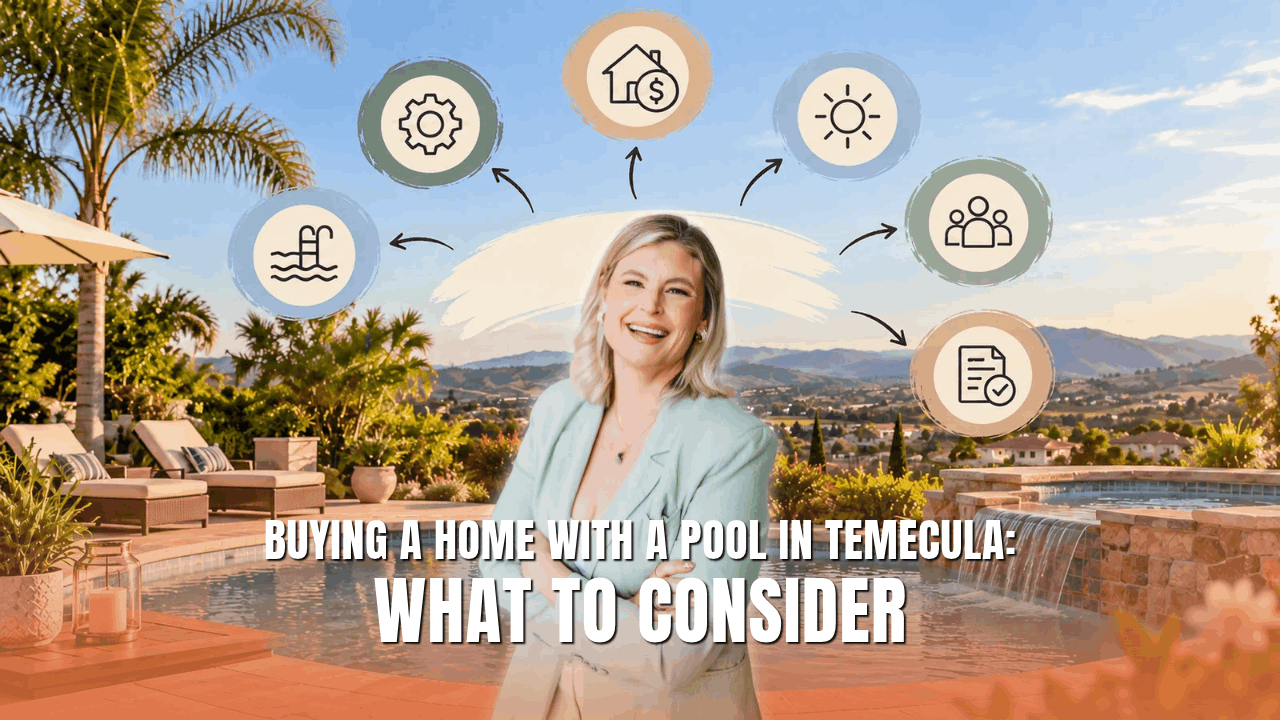
Buying a Home With a Pool in Temecula: What to Consider
Imagine spending a warm Temecula afternoon relaxing by your own backyard pool, hosting family barbecues, or enjoying a refreshing swim without leaving home. For many buyers, a swimming pool is one of the most appealing features of a Southern California property.
With Temecula's warm summers and outdoor-focused lifestyle, a home with a pool can offer a wonderful space for relaxation, entertaining, and making memories. Whether you're searching for a family home, a property for hosting guests, or a beautiful backyard retreat, a pool may be high on your wish list.
However, buying a home with a swimming pool involves more than admiring the water and imagining summer gatherings. Pool condition, maintenance costs, safety requirements, insurance, and long-term upkeep should all be part of your decision.
Before making an offer on a pool home in Temecula, here are five important things to consider.
1. Understand the True Cost of Owning a Pool
A swimming pool can add enjoyment to your home, but it also comes with ongoing expenses. Even a pool that looks clean and well-maintained during a showing may require regular service, equipment repairs, and occasional upgrades.
Before purchasing a property, consider how much you are comfortable spending on pool maintenance in addition to your regular housing expenses.
Routine cleaning and maintenance
Swimming pools require consistent care to remain clean, safe, and ready to use. Depending on the pool and how frequently it is used, maintenance may include:
-
Skimming leaves and debris from the water.
-
Brushing pool walls and cleaning the floor.
-
Testing and balancing water chemistry.
-
Cleaning filters and maintaining circulation systems.
-
Inspecting pumps, valves, and other equipment.
-
Maintaining the pool deck, tile, and surrounding surfaces.
Some homeowners handle basic maintenance themselves, while others hire a professional pool service. Your total cost will depend on the pool's size, equipment, condition, and the level of service you choose.
Repairs and equipment replacement
Beyond routine cleaning, pool equipment can eventually wear out. Pumps, filters, heaters, lighting, automation systems, and other components may require repairs or replacement.
The pool itself can also develop problems over time. Damaged tiles, deteriorating plaster, cracked decking, or leaks may lead to expenses that are significantly higher than routine maintenance.
Ask the seller about the age of the pool and its major equipment, along with any available service records, repair receipts, and warranty information.
Water and energy expenses
A pool may also affect your utility bills. Water is needed to replace evaporation and water lost through normal maintenance, while pumps and heating systems consume energy.
If the pool has a heater, ask how frequently it is used and review any available utility records. A pool cover may help reduce evaporation and heat loss, depending on the type of pool and how it is used.
Buyer tip: Before finalizing your budget, request available maintenance records and estimate the cost of professional service, utilities, and potential repairs. Knowing these expenses ahead of time can help you decide whether the property fits your long-term budget.
2. Schedule a Separate Pool Inspection
When buying a home, a general home inspection is an important step. However, you should not assume that a standard home inspection provides a complete evaluation of the swimming pool and its equipment.
A separate pool inspection by a qualified professional can help you better understand the pool's condition and identify potential issues before closing.
What should be checked?
Depending on the pool and its features, a specialist may evaluate:
-
Pool structure: Look for visible cracks, deterioration, or other signs that may require further investigation.
-
Pool surface and tile: Check for loose tiles, damaged finishes, or deteriorating grout.
-
Plumbing and circulation: Assess visible plumbing components, water circulation, and equipment operation.
-
Pump and filtration system: Review the condition and operation of major equipment.
-
Heating system: If the pool is heated, check the equipment's condition and operation.
-
Pool deck and coping: Look for damage, uneven surfaces, drainage concerns, or potential trip hazards.
-
Water loss: Investigate signs of possible leaks or unusual water-level changes.
The scope of an inspection varies. Some problems, including concealed plumbing leaks or structural defects, may require additional testing or specialist evaluation.
Look for warning signs during your showing
You can also pay attention to visible details while touring the property.
Notice whether the water appears unusually cloudy or green, whether there are loose tiles or damaged surfaces, and whether the equipment makes unusual noises. Ask about unexplained water loss, recent repairs, or periods when the pool could not be used.
These observations do not necessarily mean the pool has a serious problem, but they can help you identify questions to raise with the seller and inspector.
Ask about the pool's history
Before making a final decision, ask when the pool was installed, whether it has been resurfaced, and whether major equipment has been replaced. Request available permits, warranties, service records, and documentation of past repairs.
If the seller has made substantial improvements, confirm whether the work was appropriately permitted when required.
Buyer tip: Arrange the pool inspection early enough to review the findings within your contractual inspection period. If significant issues are identified, you may have more options to evaluate repairs, negotiate terms, or reconsider the purchase, depending on your contract.
3. Review Pool Safety Features and California Requirements
A pool can be a wonderful feature for households that enjoy swimming and outdoor activities, but safety should always come first.
This is particularly important for families with young children, households with pets, and homeowners who regularly entertain guests.
Before purchasing a home with a pool in Temecula, evaluate the existing safety features and confirm whether applicable requirements have been met.
Check barriers, gates, and alarms
During your property tour, look at the pool's fencing, gates, doors, and other safety measures. Check whether gates close and latch properly, whether access can be controlled, and whether there are obvious hazards around the pool area.
Depending on the property and applicable requirements, relevant safety features may include an isolation fence, removable mesh fencing, an approved safety cover, door or pool alarms, or self-closing and self-latching devices.
California's Swimming Pool Safety Act includes requirements for residential pools and spas. For covered new construction or permitted remodeling at a private single-family home, the law generally requires at least two qualifying drowning-prevention safety features, subject to applicable exceptions. Requirements can depend on the circumstances, so verify the rules that apply to the particular property.
You can review the state's Swimming Pool Safety Act information for more details.
Think about your household's needs
If you have children or frequently host families with young children, consider how access to the pool will be controlled. A safety cover or alarm should not automatically be treated as a substitute for appropriate supervision and other suitable safety measures.
Also look for slippery surfaces, damaged handrails, exposed electrical components, and other conditions that may need attention.
If the home has a spa, water features, or other recreational equipment, include those features in your safety review.
Verify compliance rather than making assumptions
Do not assume a pool meets current requirements simply because it is already installed. Ask for available permit and inspection records, and consult the appropriate building department or qualified professional if you have questions about compliance.
For buyers planning to remodel or upgrade a pool after closing, check applicable permitting and safety requirements before beginning work.
Buyer tip: Make pool safety part of your buying checklist, just as you would review smoke alarms, electrical systems, and other important features of the home.
4. Consider Water Use, Landscaping, and the Backyard Layout
A pool affects more than the area immediately surrounding the water. It can also influence landscaping, outdoor living space, drainage, and the amount of work required to maintain your backyard.
In Temecula, where outdoor spaces can be an important part of home life, these details deserve careful consideration.
Understand water use
Pools lose water through evaporation, splashing, and routine maintenance. The amount varies depending on the weather, pool size, use, and whether a cover is used.
Ask about the property's typical water use and review available utility records. If you are concerned about expenses, consider whether a pool cover, efficient equipment, or adjustments to the surrounding landscape could help reduce water consumption.
If the property has an irrigation system, check whether it operates separately from the pool equipment and whether there are any visible leaks or drainage concerns.
Evaluate the pool's condition and surrounding landscape
The landscaping around a pool can influence how much maintenance the property requires.
Trees and plants may provide shade and privacy, but some can drop leaves, flowers, or other debris into the water. Roots may also affect nearby paving or other structures over time, depending on the plants and site conditions.
Look at the condition of the pool deck, patio, drainage, retaining walls, fencing, and surrounding hardscape. Consider whether the layout provides enough space for seating, dining, and other activities you want to enjoy.
If you plan to redesign the backyard, investigate any applicable rules, permits, drainage requirements, and property restrictions before committing to major changes.
Check the equipment and outdoor features
A pool area may include lighting, an outdoor kitchen, a covered patio, a heater, an automated cleaning system, or a water feature.
These additions can make the backyard more enjoyable, but each may require maintenance or repairs. Ask which features are included in the sale and whether the seller has documentation for their installation or servicing.
Buyer tip: Imagine how you will use the entire backyard - not just the pool. A layout that accommodates relaxing, dining, entertaining, and safe movement may be more practical than one focused entirely on the water.
5. Think About Insurance, Resale Value, and Long-Term Appeal
A swimming pool may be an attractive feature for some buyers, but it is not automatically a financial advantage for every homeowner.
Before purchasing a pool home in Temecula, consider how the pool may affect insurance, future maintenance, and the property's appeal when you eventually decide to sell.
Review homeowners insurance
A swimming pool can affect the liability considerations associated with a property. Insurance requirements and costs vary by insurer, property, and coverage.
Before closing, tell your insurance professional that the property has a pool. Ask whether the pool affects coverage, liability limits, exclusions, or required safety features.
If the property has a diving board, slide, spa, or other special feature, mention those details as well. Do not assume that a policy covering a home without a pool will provide the same terms for a pool home.
Consider future buyers
A pool may appeal to buyers who enjoy swimming, entertaining, and outdoor living. In a warm-weather community like Temecula, that lifestyle can be a meaningful selling point.
However, some buyers prefer a lower-maintenance backyard or do not want the additional responsibilities that come with pool ownership. The pool's condition, design, maintenance history, and overall fit with the property can influence how prospective buyers view it.
A well-maintained pool with functional equipment and appealing outdoor surroundings may be easier to present than one that requires extensive repairs.
Do not assume the pool will increase the home's value
The impact of a pool on resale value depends on factors such as the local market, comparable homes, the pool's condition, the property's price range, and buyer preferences.
Rather than assuming that a pool guarantees a higher resale price, ask a local real estate professional to review comparable properties and discuss how pools are viewed in the neighborhood you are considering.
Decide whether the pool fits your lifestyle
Ultimately, the most important question is whether you will enjoy using the pool enough to justify its costs and responsibilities.
If your household regularly swims, entertains outdoors, or enjoys spending time in the backyard, a pool may be a valuable lifestyle feature. If you rarely plan to use it, the ongoing expenses and maintenance may outweigh the benefits.
Buyer tip: Evaluate a pool as both a lifestyle feature and a long-term responsibility. The right decision should make sense for your finances today and your plans for the future.
Is Buying a Home With a Pool in Temecula Worth It?
For many buyers, the answer can be yes. A pool can create a private space for relaxing, swimming, entertaining, and enjoying the warm weather. It may also make a backyard feel more inviting and provide an outdoor feature that suits your household's lifestyle.
However, the right choice depends on more than the appearance of the property.
A home with a pool should fit your budget, maintenance preferences, safety needs, and long-term plans. Understanding the condition of the pool, checking its safety features, reviewing insurance, and estimating ongoing costs can help you make a more confident decision.
If you are comparing several homes in Temecula, consider the overall property rather than focusing only on the pool. The home's layout, location, condition, price, and surrounding neighborhood are just as important.
Final Thoughts
Buying a home with a pool in Temecula can be an exciting opportunity to enjoy Southern California living. From weekend gatherings to quiet afternoons by the water, a well-maintained pool can become an important part of your home.
The key is to understand what comes with it. Review maintenance costs, arrange a pool inspection, check safety features, evaluate water use, and confirm insurance considerations before moving forward.
With the right preparation and professional guidance, you can find a home that offers the outdoor lifestyle you want without overlooking the responsibilities of pool ownership.
Looking for a home with a pool in Temecula, CA? Connect with us to explore available properties, compare your options, and find a home that fits your lifestyle and budget.
We’re The Hardy Group, your local realtors and community experts specializing in luxury real estate and premium marketing.
We’re always just a DM or text away.
📱 951.465.3054
Let’s connect!
Follow us!
IG - @househardys
Website - https://askhardy.com/
YouTube - @livingintemeculavalley
Categories
Recent Posts